




Save your natural tooth, relieve the pain, and get back to your life — root canals are far more straightforward than their reputation suggests.
Root canal treatment (RCT) is a procedure to treat a tooth infection that has reached the pulp — the innermost layer of the tooth containing nerves and blood vessels. When decay, a crack, or trauma allows bacteria to penetrate this deep into the tooth, the pulp becomes inflamed or infected. The result is often significant pain, sensitivity, and swelling.
During root canal treatment, the infected pulp is carefully removed, the canals are cleaned and shaped, and the tooth is sealed and typically restored with a crown. The procedure saves the natural tooth — preserving its function and appearance, and eliminating the infection entirely.
Root canals have an undeserved reputation for being painful. In reality, the procedure is performed under local anaesthesia and is no more uncomfortable than having a filling placed. What patients actually experience is relief — because it’s the infection causing the pain, and the root canal ends it.
The following symptoms may indicate that an infection has reached the tooth pulp and that root canal treatment could be needed
If you’re experiencing any of these symptoms, it’s important to seek care promptly. A dental infection will not resolve on its own and can spread to surrounding teeth, the jaw, and in serious cases, beyond the oral cavity.
Root canal treatment typically takes one to two appointments, depending on the complexity of the case. Here is a step-by-step overview:
Your dentist takes a digital X-ray to assess the extent of the infection, identify the number of root canals in the affected tooth, and confirm root canal treatment is the appropriate course of action.

Local anaesthesia is administered to completely numb the area. Sedation options are available for patients who experience dental anxiety. Once numb, the procedure is comfortable — most patients feel nothing more than mild pressure.
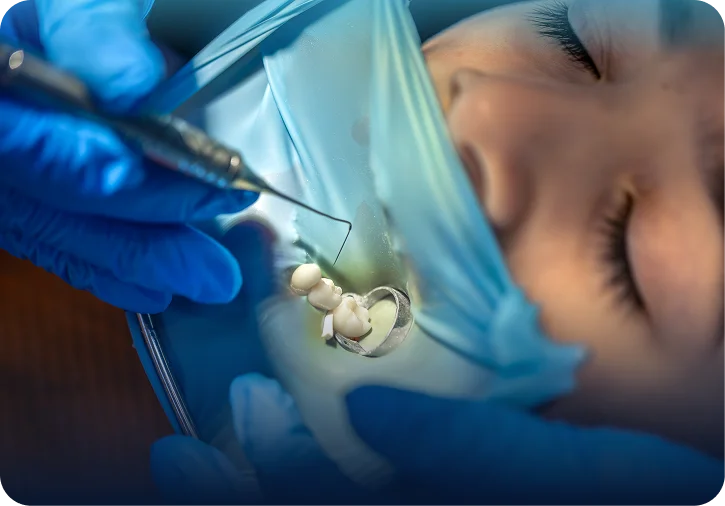
A small rubber dam is placed around the tooth to isolate it from saliva and maintain a clean working environment throughout the procedure.
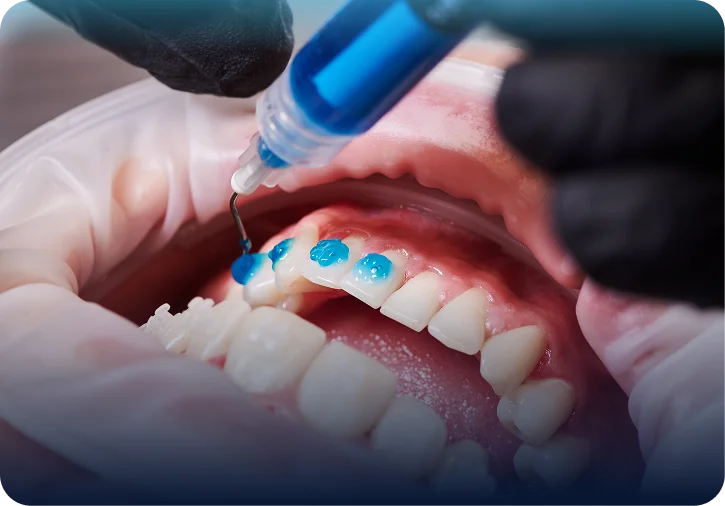
Your dentist creates a small access opening in the crown of the tooth and carefully removes the infected pulp from the pulp chamber and root canals.

Your dentist takes a digital X-ray to assess the extent of the infection, identify the number of root canals in the affected tooth, and confirm root canal treatment is the appropriate course of action.
Local anaesthesia is administered to completely numb the area. Sedation options are available for patients who experience dental anxiety. Once numb, the procedure is comfortable — most patients feel nothing more than mild pressure.
A small rubber dam is placed around the tooth to isolate it from saliva and maintain a clean working environment throughout the procedure.
Your dentist creates a small access opening in the crown of the tooth and carefully removes the infected pulp from the pulp chamber and root canals.

Mild soreness or sensitivity in the treated area for a few days after the procedure is normal and expected. Here’s how to care for your tooth during recovery:
Most patients return to normal activities the same day or the day after treatment. If you experience increasing rather than decreasing pain, significant swelling, or other concerns, contact us and we’ll see you promptly.
The procedure is performed under local anaesthesia, making it comfortable for the vast majority of patients. Most people report that the treatment itself feels similar to having a filling placed. Sedation options — including nitrous oxide (laughing gas), oral sedation, and IV sedation — are available for patients who feel anxious. The pain associated with root canal is the infection before treatment; the procedure ends it.
Root canal treatment in Calgary typically ranges from $800 to $1,500, depending on the tooth being treated and the number of canals involved. Front teeth generally have one or two canals and are simpler to treat; molars have three or four and require more time. A crown, typically recommended afterward, is an additional cost. Planet Dental will provide a clear cost estimate before proceeding, and we accept most major insurance plans and the Canada Dental Care Plan.
Most root canal procedures are completed in a single appointment of 60–90 minutes, depending on the complexity of the case. Teeth with multiple canals or significant infections may require a second appointment. Your dentist will let you know at your initial assessment.
A pulp infection will not resolve without treatment. Left untreated, the infection spreads to the surrounding bone (a dental abscess), can cause the tooth to become non-restorable, and may require extraction. In some cases, the infection can spread beyond the jaw — a situation that becomes medically serious. Root canal treatment, while it may feel daunting, is far preferable to the alternative.
A root canal-treated tooth that is properly restored with a crown and well maintained with regular brushing, flossing, and dental check-ups can last for the rest of your life. The success and longevity of the treatment depend significantly on having the tooth properly crowned afterward and keeping up with routine dental care.
If you’re experiencing tooth pain, swelling, or sensitivity that hasn’t resolved, come in and let us take a look. Root canal treatment is one of the most straightforward ways to save a tooth — and to stop the pain. Book your appointment today.
Your appointment request has been sent successfully. We will contact you soon.